
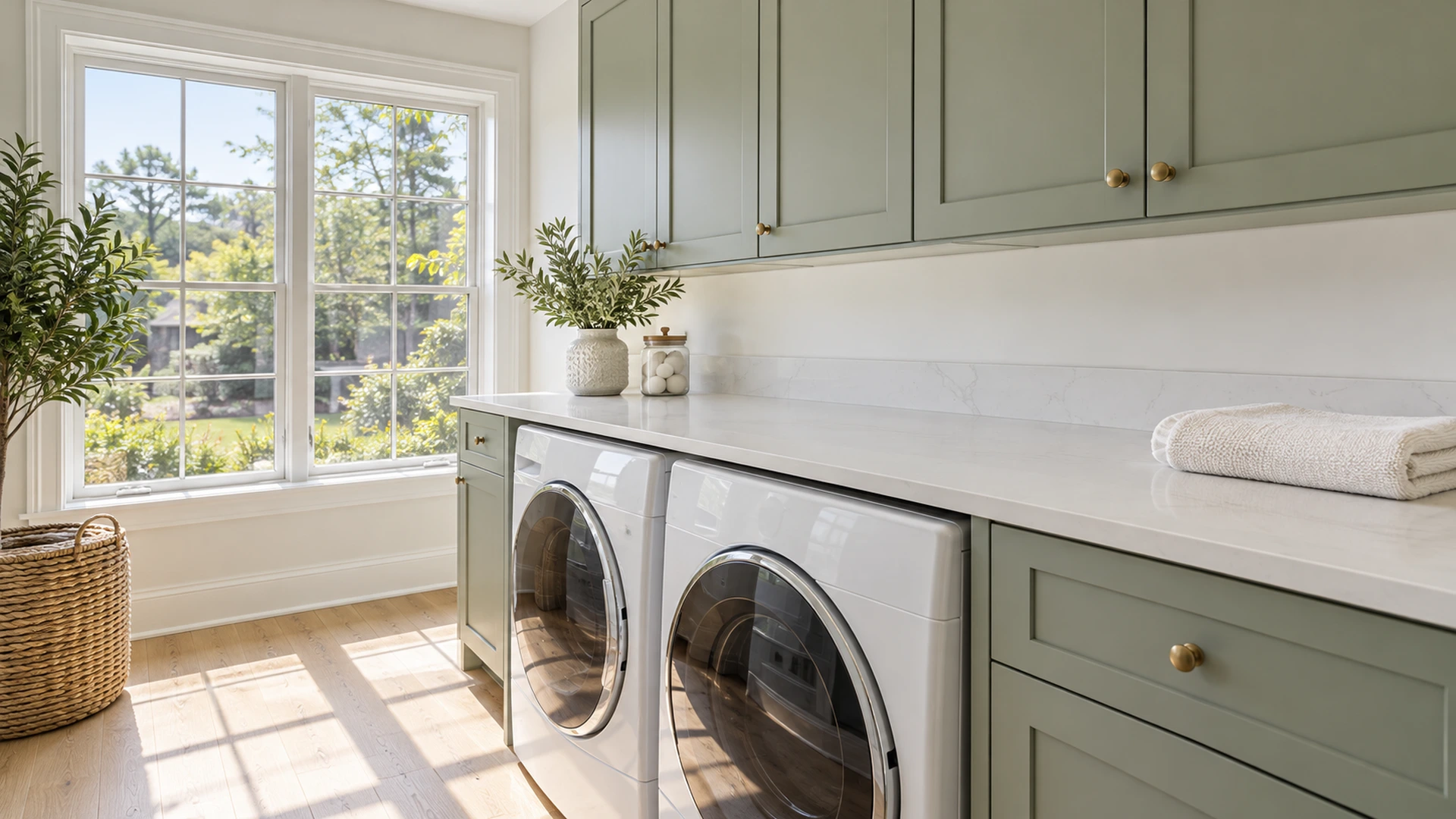
A laundry counter becomes the place for everything that comes out of the dryer, along with detergent bottles, loose buttons, and whatever was in someone's pockets. Then a clean shirt lands on a dusty patch or a sticky ring left by a bottle. The folding surface needs a cleaning pass of its own.
In a Neptune home where laundry moves through all week, it helps to fit that pass between loads. Clear enough space to see the entire counter, check its care instructions, and leave it dry before the next basket arrives.
Move the laundry and bottles off the surface
Put clean laundry somewhere clean and dry while you work. Keep it separate from used cloths and anything picked up from the floor. Empty the folding counter completely if you can, including the little tray that catches coins. A tray can hide a ring of lint around its edge.
Check the bottom and outside of each closed laundry-product bottle before moving it. Follow its label when dealing with spills. Keep products in their original containers and avoid combining them during cleanup. If a container is leaking, handle that problem before setting it back on a freshly cleaned surface.
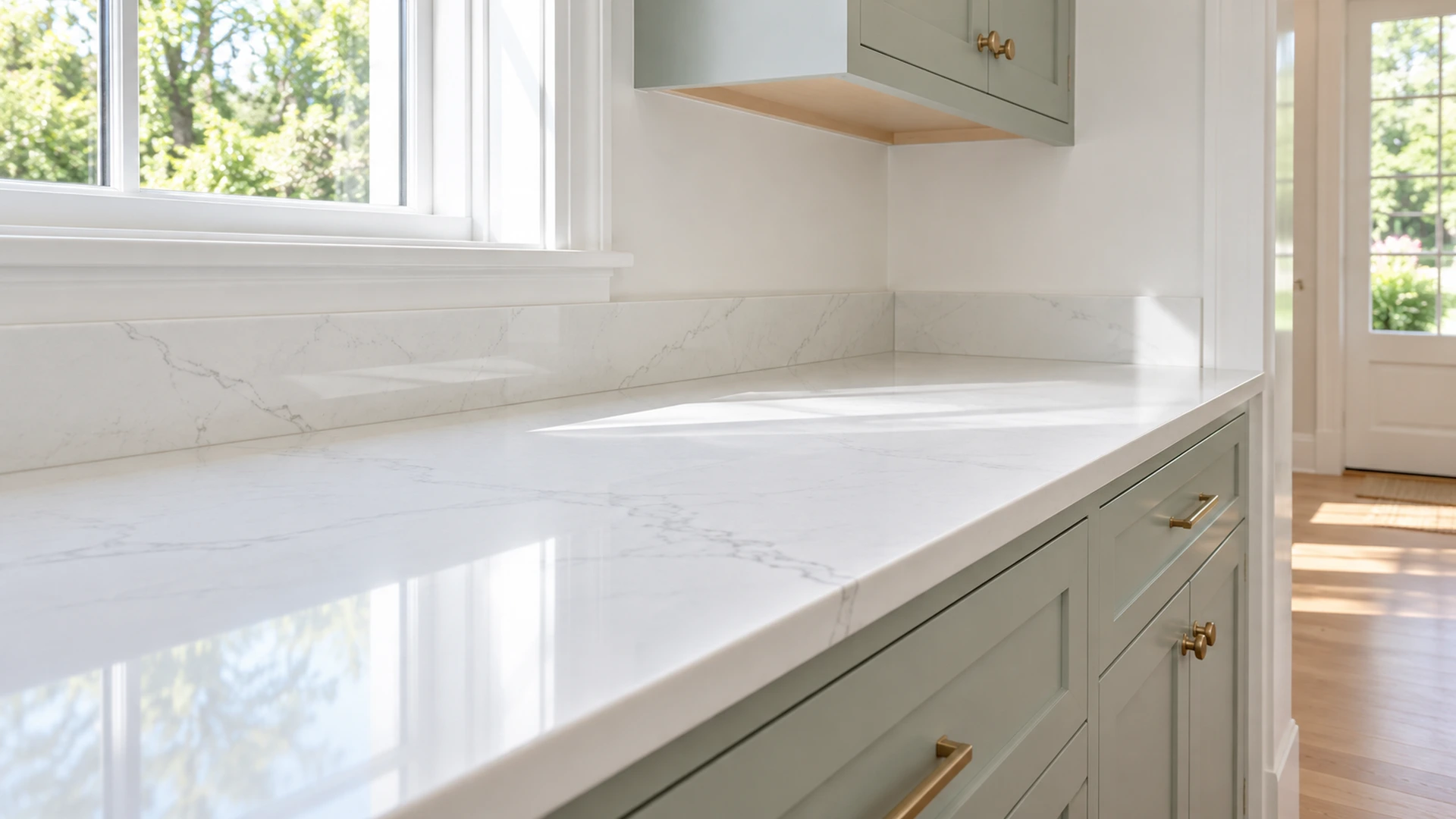
Find the instructions for the countertop
A laundry counter may be quartz, laminate, sealed wood, or another material with its own restrictions. Use the maker's care guidance to choose the method. The label on a household cleaner also needs to allow its use on that surface. A product you use in another room may have different limits here.
Look along seams and the backsplash joint before adding moisture. If an edge is lifting, the surface is damaged, or there is unexplained dampness, note it and address the cause separately. Keep the cleaning pass to sound, reachable surfaces. Repeated wiping will not fix a failed seam.
The Neptune house cleaning page is a starting point if the room needs help alongside the rest of the house. Mention the laundry counter so its location and material are clear.
Give clean laundry a dry, clear place to land.
Pick up loose lint before treating sticky spots
Use a clean, soft tool suited to the counter to collect loose lint and dust. Work into the reachable back corners and around the edge of the backsplash. Keep what you collect away from the laundry baskets. A cloth already loaded with lint will simply move it to a new patch of counter.
Once the dry debris is gone, inspect any remaining ring or smear. Treat a product spill according to its label and the countertop guidance. Start with a small test in a discreet area. Avoid trying several cleaners in succession because the mark does not disappear immediately; first check what the surface allows and how the previous product should be removed.

Finish with a dry, usable folding area
Follow the cleaner's directions for removing residue, then dry the counter as the surface guidance allows. Check the front edge where clothes brush against it when you fold. Also check the spot where a basket rests; it is easy to clean the middle and overlook that outer strip.
Return only the items that need to live on the counter. If there is a suitable cabinet or shelf, keep closed bottles there according to their storage instructions. Leave enough empty space to lay out a shirt without moving supplies first. Clean the bottom of any tray before putting it back, and keep it outside that folding space.
Keep the cleaning request specific
For a room that has fallen behind, ask about deep cleaning in Neptune and identify the folding counter as a priority. Confirm the reachable surfaces included in the visit. Moving appliances, opening machines, and handling dryer ducts are separate tasks; do not assume a request to clean the laundry room includes them.
Request a cleaning estimate with a note about the counter material and the residue you have noticed. Before the visit, put away clothes and personal items so the surface is available. Between visits, check the folding area before setting down a fresh load. Catching a bottle ring then is easier than discovering it on something you have just washed.